Constraint Management in SAP at the TOC Innovation Summit 2024
Integrating Milliarum CCPM with SAP

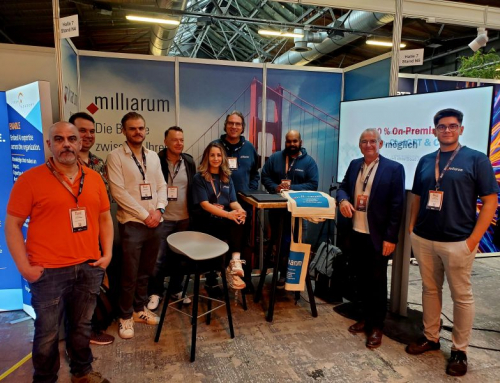
At the TOC Innovation Summit In September, practical examples were used to demonstrate how companies can identify and eliminate bottlenecks. Milliarum was there in person and, as part of a customer presentation and other sessions, showcased the implementation of the Theory of Constraints (TOC) and Critical Chain Project Management (CCPM) approaches using SAP. The Milliarum SAP CCPM solution is an SAP add-on for portfolio, project, and resource management and has been successfully used by customers for over 10 years. We’ve summarized the key takeaways from Bad Nauheim for you here.
The Theory of Constraints is a management approach developed by Eliyahu M. Goldratt that focuses on identifying and eliminating the limiting factors—or bottlenecks—within a company in order to improve performance. The basic idea is that every organization or system is constrained by at least one bottleneck. Eliminating this bottleneck leads to a significant improvement across the entire company. Thus, resources are not optimized evenly throughout the system, but rather the performance of the bottleneck is prioritized. This has an impact on the profitability of the entire company: lead times can be shortened, planning improved, and productivity increased.
By focusing on the bottleneck, we achieve greater on-time delivery and shorter lead times
Milliarum has been integrating the principles of the Theory of Constraints into its software solutions for portfolio, project, and resource management in SAP EPPM for many years. With this add-on, we offer our users Milliarum SAP Lean / Critical Chain Project (CCPM) Management the added value of being able to use the CCPM methodology in SAP. This makes it possible to manage projects based on buffer consumption and the degree of completion. Projects can be scheduled in sequence starting at the bottleneck. To this end, the solution—based on Lean Project Management—provides customer-specific charts and tables with analysis options, such as for delivery dates, so that delivery delays, on-time delivery rates, and lead times can be visualized. This also makes it immediately apparent at a glance which projects are in the red zone. Workstation utilization can also be visualized using the tool. The integration of Lean Project Management and the CCPM methodology with SAP provides the necessary data in real time: isolated IT solutions and interfaces are avoided or replaced. Our users benefit from improved on-time delivery, enhanced compliance, sustainability, and flexible scalability.
Haver & Boecker Presentation
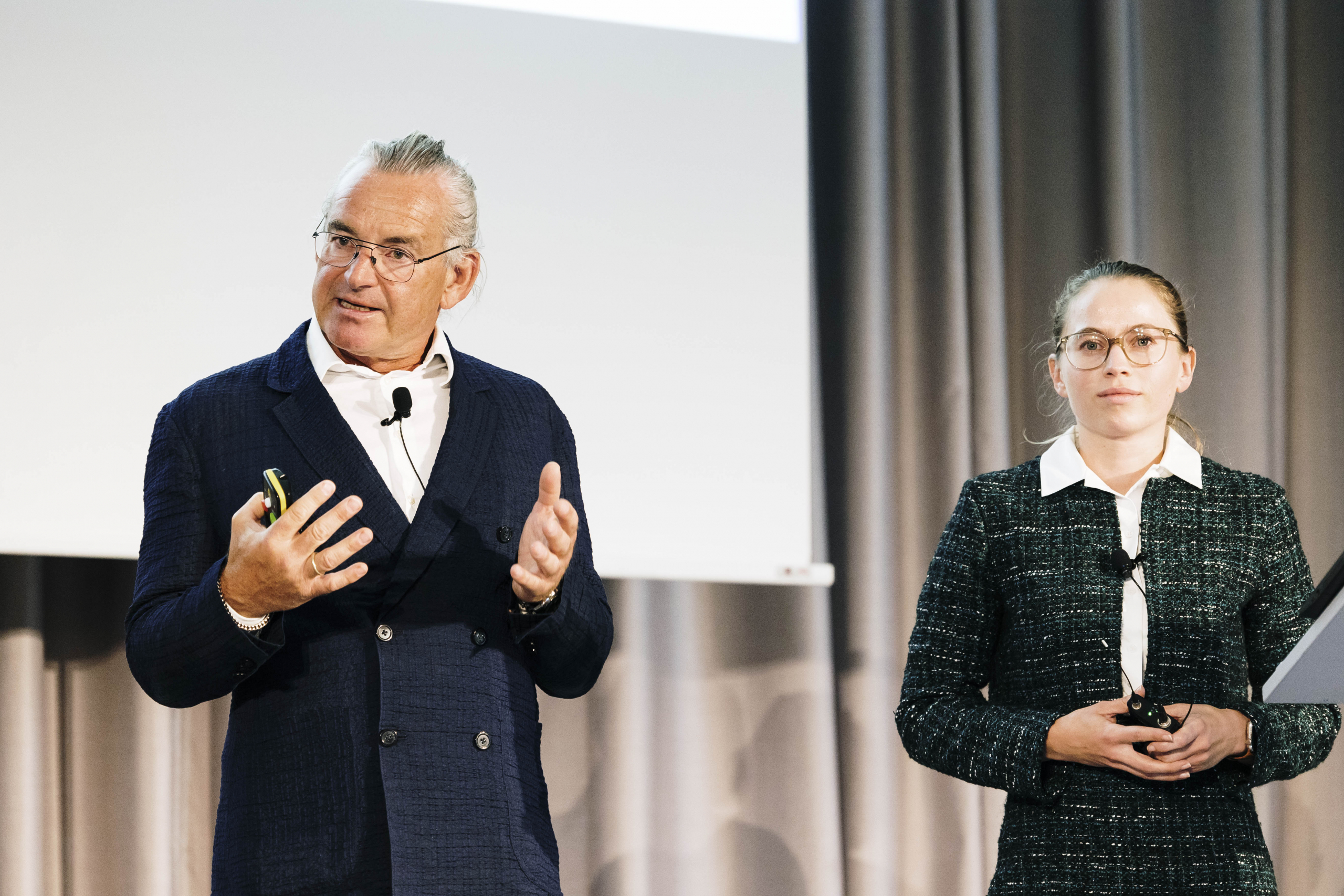
Machinery manufacturer Haver & Boecker has the Milliarum SAP Lean / Critical Project Management and the app PS Capacity Analysis shared his experiences from the TOC Innovation Summit in a presentation: The solutions handle the scheduling of customer projects within the company’s SAP-managed machine shop. This scheduling begins as early as the proposal phase. Using predefined criteria, the solution assigns each inquiry to a responsible project coordinator. Taking into account the current project portfolio as well as available resources and capacities, an inquiry is scheduled and a timeline is created. This creates transparency—both regarding the status of individual project inquiries and across the company’s overall planning. Thanks to the feedback from individual processes in SAP, not only is the project status always up to date, but projects are also prioritized automatically. As a result, the family-run wire weaving company has been able to handle customer projects more efficiently, optimize its capacity utilization, minimize delivery delays, and reduce the workload on employees.

The Potential of AI for Analyzing the Causes of Bottlenecks
The TOC Innovation Summit has traditionally focused on knowledge sharing and an inspiring exchange of ideas about further applications and the potential of bottleneck management. The TOC community couldn’t ignore artificial intelligence either: Discussions centered on how AI could access data from the SAP system in the future—for example, to categorize, systematize, and further analyze the causes of variances and bottlenecks. We are taking these and other suggestions back to our SAP software development team and will continue to work on usability to increase the value our solutions provide to users.